
What Lingerie Should I Wear Under Different Outfits?
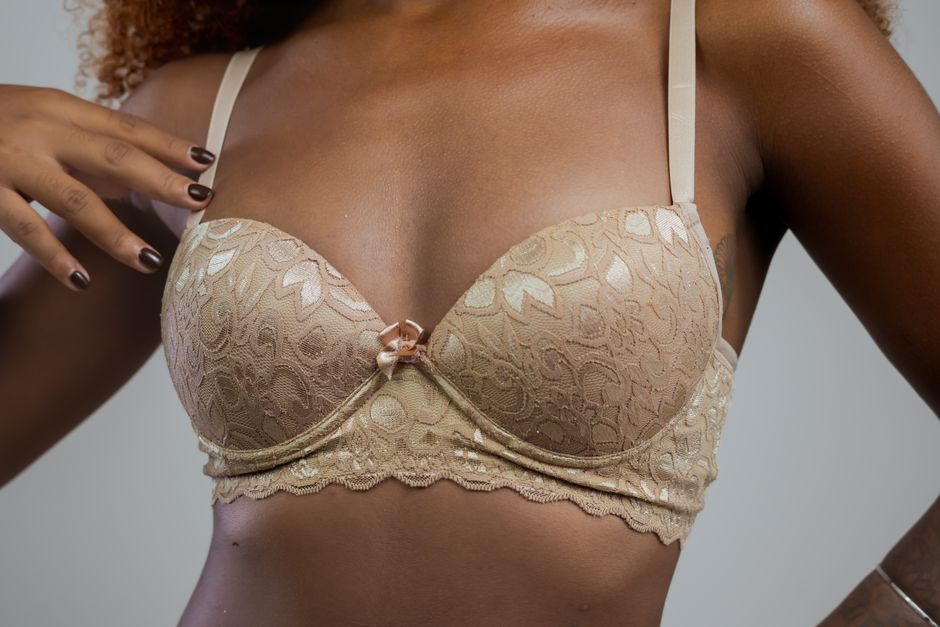
Choose lingerie by solving the outfit's visibility problem first: seamless, close-fitting briefs or thongs for tight clothing; skin-tone coverage under white or sheer fabrics; strapless, adhesive, or tape-based support for exposed shoulders and backs; and lightweight shorts or a bodysuit when you need coverage beneath a dress. The decisive variable is fit: a garment that rolls, pinches, or sits in the wrong place will show regardless of its label.
The common mistake is treating “seamless” as a complete answer. It is not. Invisibility is a system: the outer fabric, the garment's tension, the undergarment's edge, its color, and its support construction must agree. A flawless thong can still create a visible waistband if it is too small; a smooth bra can still announce itself under a thin top if its color creates contrast.
What lingerie should I wear under a tight dress?
Under a tight dress, wear a smooth, correctly fitted bra paired with seamless briefs, a thong, lightweight shorts, or a bodysuit according to the coverage you need. The goal is not to compress the body into a different shape; it is to eliminate abrupt edges between skin, lingerie, and dress fabric.
Start with the dress's fabric. Thin, stretch-heavy knits reveal almost every seam and elastic edge, so a low-profile finish matters more than decorative detail. Choose underwear that lies flat at the waist and legs. If an edge digs in, size or cut is the problem. If fabric pools or shifts, the garment is too loose or poorly matched to the dress's movement.
For dresses that also raise a coverage question, Vogue's stylist guidance on backless undergarments identifies lightweight shorts as an option for coverage and for reducing thigh chafing under dresses or skirts. A strapless plunging bodysuit can make more sense when the outfit requires continuous smoothing across the front and back. This is a trade-off, not a universal upgrade: more fabric can improve coverage but can also create a new edge if the bodysuit is too tight or too loose.
| Dress problem | Most useful lingerie direction | What to avoid |
|---|---|---|
| Fitted, thin fabric | Seamless briefs, thong, or smooth bodysuit | Raised seams, thick lace, tight waist elastic |
| Dress needing thigh coverage | Lightweight shorts | Heavy, rolling leg bands |
| Low front or low back | Plunging bodysuit, adhesive bra, or tape when support is needed | Conventional straps or bands that conflict with the cut |
Support deserves separate analysis. A PubMed-indexed laboratory study in Ergonomics found breast-movement reduction from 36% to 74% across 98 sports bras, and only 69% of bras marketed as high support reached the study's high-support tertile of more than 63% reduction. Those results concern sports bras, not eveningwear, but the design lesson transfers cleanly: construction and adjustment matter more than a label. Encapsulation, padded cups, nylon, an adjustable underband, and a high neck drop accounted for 37.1% of the variation measured in that study.
Which underwear does not show through leggings or thin pants?
Under leggings or thin pants, a seamless thong, seamless brief, or laser-cut brief that fits flat is usually the least visible choice; lightweight shorts can work when their leg edges remain hidden and smooth. Choose based on where the outer fabric is tightest, because that is where a waistband, leg opening, or folded edge becomes visible.
A thong removes one potential rear edge, but it is not the only answer. A well-fitted seamless brief can be less distracting than a thong that shifts during walking. Conversely, a brief marketed as invisible will still show if its elastic is undersized. The diagnosis is blunt: visible panty lines are generally an edge-and-tension problem, not a failure to buy a sufficiently fashionable product.
Before committing to an outfit, move in it. Sit, walk, and bend. Look for three failure modes: the waistband rolling, the leg opening cutting in, and excess fabric bunching. Each exposes a mismatch between the undergarment and the outer layer. Changing to a smoother construction is useful only after the fit is corrected.
Color is a separate problem from line. Under white or pale thin pants, choose a tone close to your skin tone rather than assuming white will disappear. The principle is contrast: a white undergarment can remain visually distinct through white fabric, while a close skin-tone tone reduces the contrast between garment and body. Public research supplied here does not establish one universally invisible shade, because skin tones and fabric opacity vary. Check the full combination under direct light.
What bra works under a backless or strapless top?
For a backless or strapless top, use nipple covers when you need coverage only, and choose an adhesive bra or boob tape when you need visible lift or support without conventional straps and a back band. The right option is dictated by the top's cut and the level of hold required, not by the word “backless” alone.
Cleveland Clinic makes the distinction explicitly: adhesive bras and boob tape can lift and support, while nipple covers prevent show-through but do not provide lift or support. That removes a frequent category error. A nipple cover cannot replace the mechanical job of a bra when the outfit and wearer require lift.
For moderate lift and smoothing without visible lines, Vogue's stylists recommend a stick-on bra. For a sheer garment where coverage is the aim, they point to seamless, skin-tone nipple covers. The choice is a small engineering problem: identify what must be hidden, then use the least complex undergarment that performs that job.
Conventional strap placement also affects comfort when it remains visible or when an outfit permits a standard bra. In a laboratory study of 23 active women with D+ cup sizes, published in Sports Medicine - Open, vertical straps produced less reported discomfort than cross-back straps, and wide straps had the lowest discomfort scores and lower pressure than standard-width and gel straps. The study focused on sport and exercise, so it does not prescribe a fashion bra; it does provide a useful constraint when shoulder pressure is the issue.
Do not treat discomfort as an aesthetic inconvenience. Cleveland Clinic notes that a wrong-size bra can be painful when its underwire is not in the proper location, and advises refitting after weight fluctuations because cup size and band length can change. Sweat and rubbing below the breast can also contribute to irritation, rashes, blisters, and fungal infection. That concern is distinct from treating toenail fungus, but the broader principle is the same: do not improvise medical treatment from an outfit problem.
Frequently Asked Questions
How do I stop bra lines from showing under a T-shirt?
Start with a bra whose band and cups sit correctly, because excess tightness, slipping, or cups that cut into tissue can create outlines under a T-shirt. A smooth-cup bra in a close skin tone is usually the most direct choice; avoid textured lace or bulky seams when invisibility is the priority. Cleveland Clinic notes that an incorrectly sized bra can be painful when the underwire is not positioned properly, so fit is not merely cosmetic.
Are seamless thongs the only option for avoiding visible panty lines?
No. Seamless briefs, laser-cut styles, lightweight shorts, and a smooth bodysuit can also reduce visible panty lines when they fit flat and suit the outfit. A thong removes the horizontal rear edge, but it is not the only construction that can disappear under clothing. The useful test is whether the garment creates a ridge, rolls, or bunches beneath the outer fabric.
What color lingerie is least visible under white clothing?
The least visible color is generally the one closest to your own skin tone, not automatically white. White underwear can appear brighter than skin through thin white fabric, while a close skin-tone piece reduces contrast. Check the combination in bright, direct light before leaving, because translucent garments reveal contrast more clearly than a fitting-room mirror often does.
The practical conclusion is simple: begin with the outfit's constraint, then choose the smallest intervention that resolves it. A tight dress needs flat edges; sheer fabric needs low contrast or coverage; an exposed back needs a support method compatible with the cut. Fit comes before terminology, because the wrong fit defeats every design category.