
What Is Formal Wedding Guest Attire?
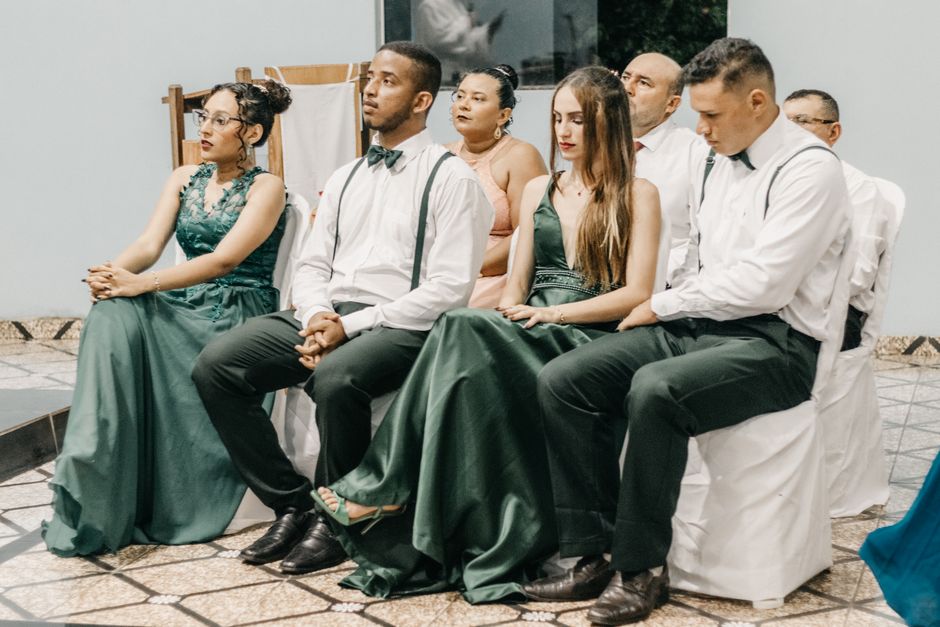
Formal wedding guest attire means polished, dressy clothing that falls below black tie in strictness and above cocktail in formality. Women can wear a dressy afternoon or cocktail dress for daytime, or a long gown or dressy cocktail dress for evening; men can wear a dark suit and tie, while a tuxedo is required only when the invitation says black tie. Use the invitation, start time, venue, and local customs to decide.
What is considered formal attire as a wedding guest?
Formal attire as a wedding guest is elevated clothing chosen to suit the event’s time, setting, and stated dress code. It does not automatically mean a tuxedo for men or a floor-length gown for women. The useful distinction is this: formal gives guests room to select polished options; black tie names a more specific standard.
According to The Emily Post Institute’s wedding guest attire guidance, the invitation and time are the best guides to formality. The same guidance says service, cultural or religious expectations, and local customs can also affect what is appropriate. Check those details before choosing an outfit.
Use this comparison to place the dress code:
| Dress code | Women | Men |
|---|---|---|
| Formal | Dressy afternoon or cocktail dress by day; long gown or dressy cocktail dress by evening | Dark suit, conservative shirt and tie; tuxedo or dark suit for evening, depending on the invitation and custom |
| Black tie | Floor-length evening gown, dressy cocktail dress, or dressiest little black dress | Black tuxedo, formal white shirt, black bow tie, and black dress shoes |
| Black-tie optional | Gown, dressy cocktail dress, little black dress, or dressy separates | Tuxedo requested; dark suit with white shirt and conservative tie is an alternative |
| Cocktail | Dressy cocktail-length outfit is a practical choice; check venue and time | Use the invitation and venue to choose a polished suit rather than assuming black tie |
Emily Post’s black-tie guide makes the key boundary clear: black tie specifies tuxedo attire for men, while black-tie optional allows a dark suit instead. A separate dress-code guide describes semi-formal as less formal than a formal event. Do not treat these labels as interchangeable.
What is a formal dress to wear to a wedding as a guest?
A formal dress for a wedding guest is a refined, occasion-appropriate dress whose length and level of dressiness fit the time and setting. For daytime, Emily Post lists a cocktail or dressy afternoon dress; for evening, a long evening dress or dressy cocktail dress can work, depending on local custom.
For women, start with the invitation’s wording, then choose the silhouette that suits the venue. A formal garden or daytime celebration may call for a dressy afternoon option, while an evening ballroom reception can support a longer, more evening-oriented look. If you are comparing seasonal choices, see this guide to formal summer wedding guest dresses.
For men, the formal baseline is a dark suit with a conservative shirt and tie, especially for daytime. At an evening wedding, a tuxedo or dark suit may fit, unless the invitation explicitly says black tie—in that case, Emily Post says the tuxedo is required. A dark suit is not a downgrade when the dress code is formal; it is a distinct option from black tie.
Before committing to a dress or suit, run a fit-and-comfort check. Sit down, walk at a normal pace, and raise your arms; confirm the outfit stays secure and allows movement. If dancing is likely, test the shoes and hem in a few steps. For pale or patterned dresses, look at the fabric in daylight and check whether it could read as white in photographs. Wedding Guest Style’s analysis counted 944 posts asking “Is this too white?”; it also cautions that its Reddit posts represent people seeking advice, not all wedding guests.
What not to wear to a formal wedding?
Do not wear an outfit that conflicts with a clearly stated dress code, appears too casual for the setting, or creates uncertainty about whether a pale color reads as white. The practical replacement is a polished outfit that matches the invitation and leaves the couple’s wedding attire as the visual focus.
Use this quick check before you get dressed:
- Code: If the invitation says black tie, follow that standard rather than substituting a regular dark suit for a tuxedo.
- Color: If a pale dress might look white, inspect it in daylight and choose another color if the effect is ambiguous. In Wedding Guest Style’s dataset, cream appeared in 81 of the 944 “Is this too white?” posts; yellow appeared in 70 and floral in 56. These are counts of posts, not a rule about which colors are acceptable.
- Fit: Check that you can sit, walk, and dance without repeatedly adjusting the outfit.
- Setting: Consider the ceremony venue and any cultural or religious expectations noted by the couple.
Avoid turning a data point into a dress-code rule. Wedding Guest Style analyzed 10,700 r/Weddingattireapproval posts published April 16–October 21, 2026, using flairs and keyword rules. It reports that 20.1% were tagged formal and 22.8% cocktail or no dress code, while noting the posters are not a representative survey of all wedding guests. The figures show active guest uncertainty, not what every wedding requires.
What is formal attire for attending a wedding?
Formal attire for attending a wedding is best chosen through a short decision path: decode the invitation, use the time as a clue, check venue and wedding website details, then clarify if a meaningful question remains. Emily Post’s wedding guidance calls the invitation and time the best guides; its general dress-code guide advises leaning more formal for semi-formal events later than 6 p.m. Treat the latter as a useful evening cue, not a replacement for a stated dress code.
- Read the exact label. “Black tie” means a tuxedo for men; “black-tie optional” permits a dark suit alternative. “Formal” leaves more room for a dark suit and dressy dresses.
- Check the start time. A daytime event points toward a dressy afternoon outfit; evening supports more evening-oriented choices. If the label is semi-formal and the event is after 6 p.m., Emily Post’s dress-code guide recommends erring on the side of formality.
- Check the venue and website. Look for ceremony, cultural, religious, weather, or venue-specific instructions. The venue helps you judge practicality, but the couple’s explicit guidance should lead.
- Ask one focused question. Send: “We’re looking forward to celebrating with you. For the formal dress code, would a dark suit be appropriate, or are you expecting black tie?” This gives the couple an easy, specific choice to answer.
The numbers also explain why a direct question can be useful: in the Wedding Guest Style analysis, formal and cocktail-or-no-code posts were both common categories. Among formal-tagged posts that mentioned dress length, 267 mentioned long dresses and 105 mentioned midi dresses. Those counts describe mentions in that dataset, not a measurement of what all guests wear. Use them as evidence that guests weigh length and dress-code interpretation—not as a prescription.
Before the event, do one final rehearsal: put on the complete outfit, sit, walk, and take a daylight look at pale colors. If a detail still depends on guesswork, send the short clarification message rather than making the couple infer what you mean.
Frequently Asked Questions
Does formal wedding attire mean a floor-length gown?
No. For a formal daytime wedding, a dressy afternoon or cocktail dress can work; for evening, a long gown is one option alongside a dressy cocktail dress. Black tie also allows some dressy cocktail dresses, according to Emily Post.
Can men wear a dark suit to a formal wedding, or is a tuxedo required?
A dark suit is appropriate for many formal weddings, including daytime events. Emily Post says a tuxedo is required when the invitation specifies black tie; black-tie optional permits a dark suit as an alternative.
How is formal attire different from black tie or cocktail attire?
Black tie is more prescriptive: men wear a tuxedo, while formal attire can allow a dark suit. Cocktail is a less formal choice than formal, while black-tie optional sits between black tie and a dark-suit option by allowing either a tuxedo or a conservative dark suit for men.
What should I wear to a formal wedding if the invitation gives no other details?
Start with the time and venue, then check the wedding website for cultural, religious, or practical guidance. Choose a polished outfit that leans dressier for an evening event, and ask the couple or a designated contact if the code remains unclear.
Sources
You may also like
Fall Formal Wedding Guest Dresses: Find Your Best Fit
Find fall formal wedding guest dresses by comparing measurements, fabric, fit details, and return terms before ordering.
How Do You Choose Formal Summer Wedding Guest Dresses?
Choose formal summer wedding guest dresses by matching the dress code to breathable fabrics, suitable colors, and venue-ready shoes.
Petite Formal Dresses for Wedding Guests: A Buying Guide
Choose petite formal dresses for wedding guests by matching the dress code, garment proportions and planned shoes.
What Lingerie Should I Wear Under Different Outfits?
A fit-focused guide to invisible, comfortable lingerie for fitted dresses, sheer tops, leggings, white clothing, and backless outfits.